ActiveSG Redesign
Analyze
THE MARKETPLACE
The marketplace for fitness and wellness apps is highly competitive, with numerous players offering a wide range of functionalities. However, ActiveSG distinguishes itself by focusing on community engagement and inclusivity. In comparison to other apps, ActiveSG's unique selling proposition lies in its integration with public sports facilities and its emphasis on fostering a sense of community among users.
The demand for holistic wellness platforms has been growing, especially in the wake of the pandemic, as people seek more comprehensive solutions for their fitness and well-being needs. To remain competitive, ActiveSG needs to address its current usability issues and enhance its features to meet the evolving expectations of its users.
USER JOURNEY AND USER FLOW
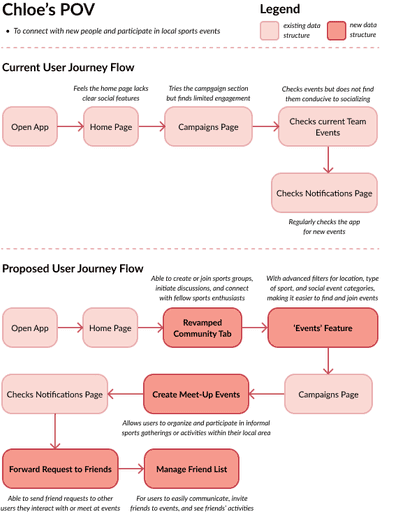
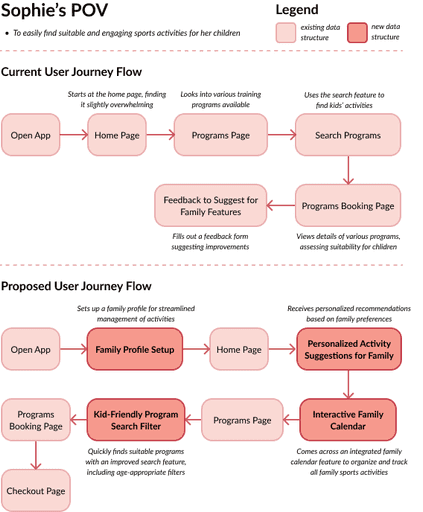
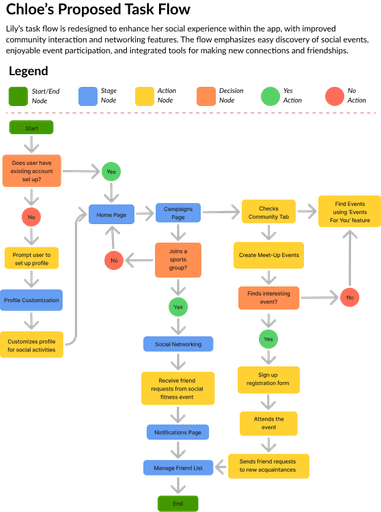
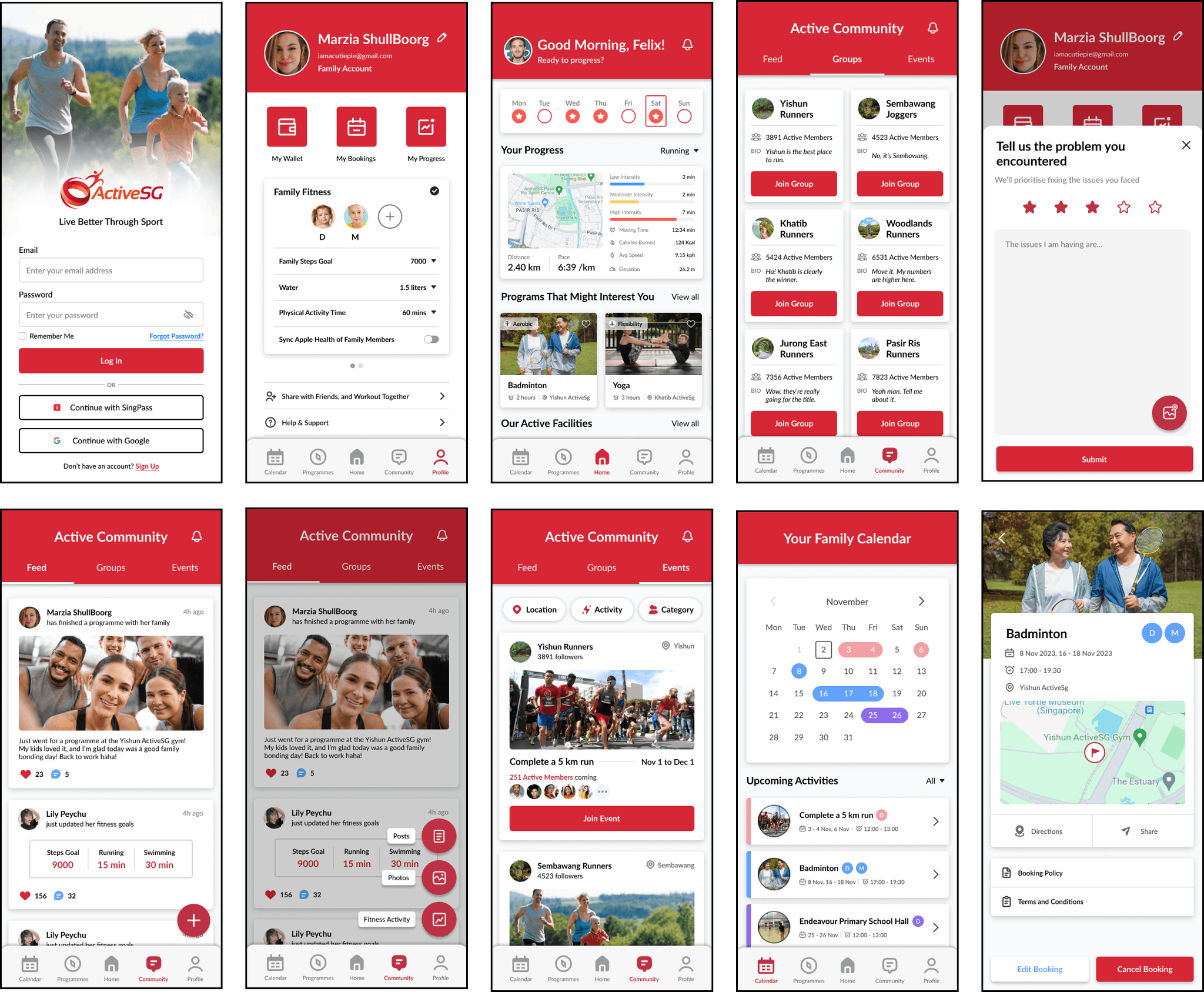
I created user journey flows to support the new features introduced in the ActiveSG app. This included a revamped Community tab, an Events feature, and the ability for users to create meet-up events and share them with friends.
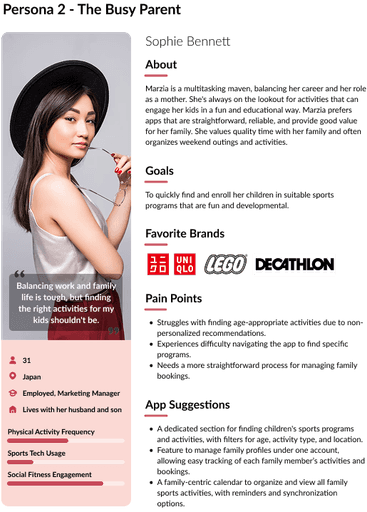
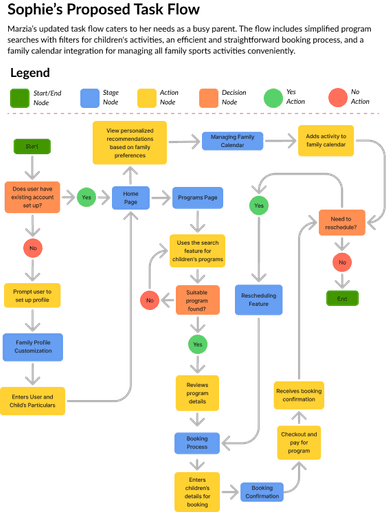
I also designed a separate user flow for family accounts, where families receive personalized activity suggestions, and parents can register their children or sign the entire family up for group activities. These flows helped structure a more intuitive and engaging navigation experience tailored to both individual users and families.
Test
USABILITY TESTING
A diverse group of users were interviewed regarding various tasks within the app, such as booking facilities, adding family members, and navigating through different sections. The testing revealed several areas where users encountered difficulties, particularly in terms of navigation and the booking process. Feedback indicated that users were looking for a more streamlined experience with fewer steps and clearer instructions. The testing also highlighted the need for a more responsive and intuitive interface.
FEEDBACK
Users found the navigation complex and confusing.
The booking process was perceived as cumbersome and time-consuming.
There were difficulties in managing bookings for family members.
The app lacked certain features and functionalities desired by users.
SOLUTION
Redesign the navigation structure to be more intuitive and user-friendly, with clear labels and a simplified menu.
Streamline the booking process by reducing the number of steps and improving the user interface for easier interaction.
Introduce a family management feature that allows one account to manage bookings for multiple family members.
Expand the app's functionalities to include features such as personalized recommendations, integration with other health apps, and virtual event participation options.
Key takeaways
WHAT WENT WELL
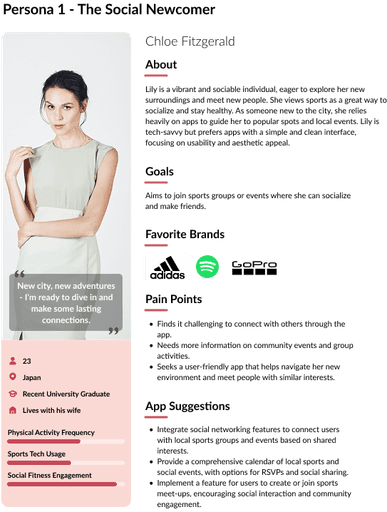
What went well was the ability to create tailored features that addressed the specific needs of different personas, which made the app feel more inclusive and purpose-driven. Throughout the design process, wireframes and usability testing confirmed that the newly introduced family and social features significantly improved user discoverability and satisfaction.
LESSONS LEARNT
From this experience, I learned that empathy-driven design is key to building relevant and meaningful features that resonate with users. Personalization and community-building also proved to be powerful in driving long-term engagement.
Most importantly, testing early and iterating frequently helped ensure that even complex features remained intuitive and valuable across a diverse user base.
PROPOSED TASK FLOW
I created proposed task flows to address the needs of different user types by focusing on key goals and pain points. The flows were designed to streamline core actions such as searching for programs, booking activities, and managing schedules, while also enhancing social engagement and community interaction. By tailoring each flow to reflect distinct user motivations and behaviors, I ensured that the overall experience felt intuitive, purposeful, and accessible for a wide range of users.
Design
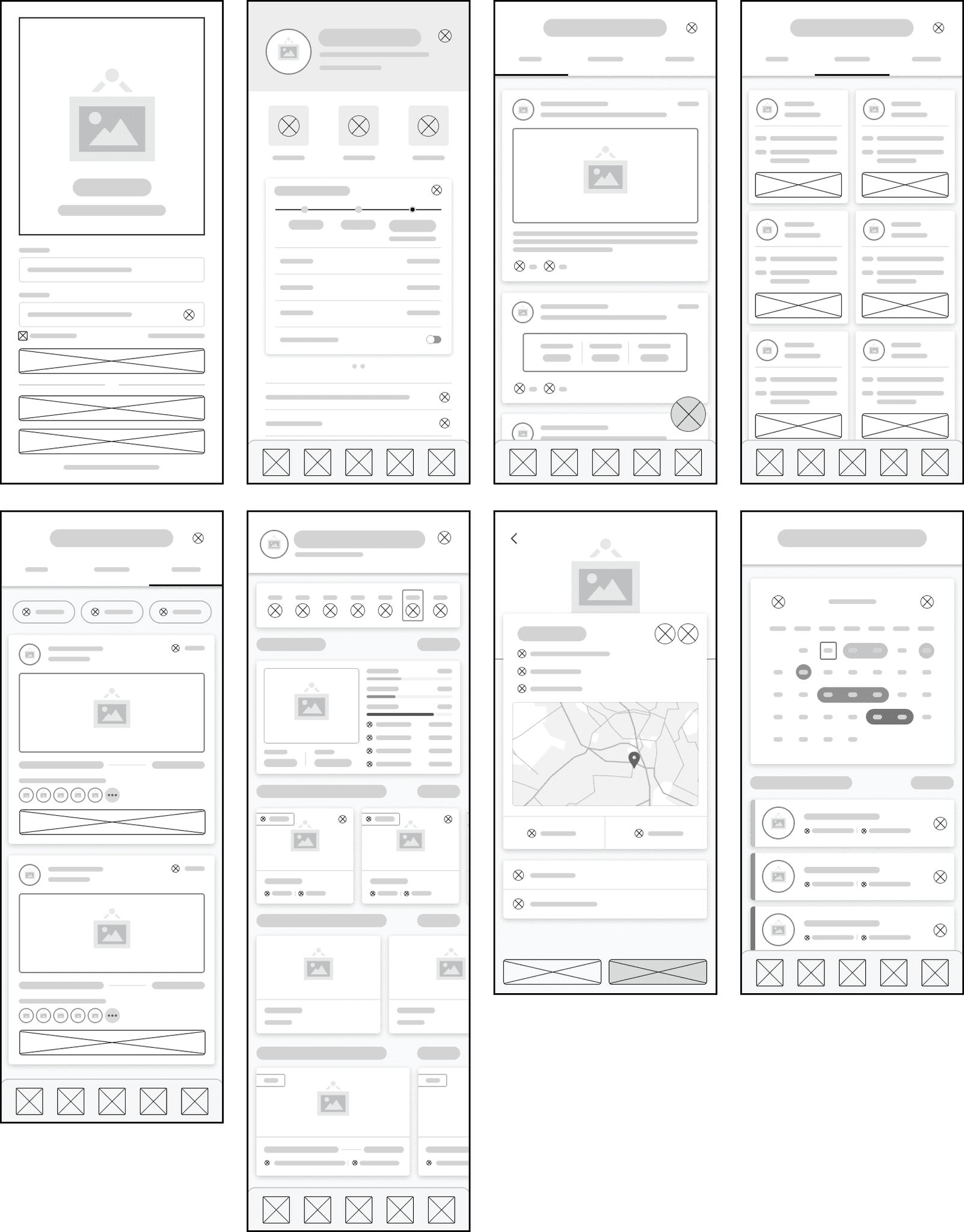
LOW FIDELITY WIREFRAMES
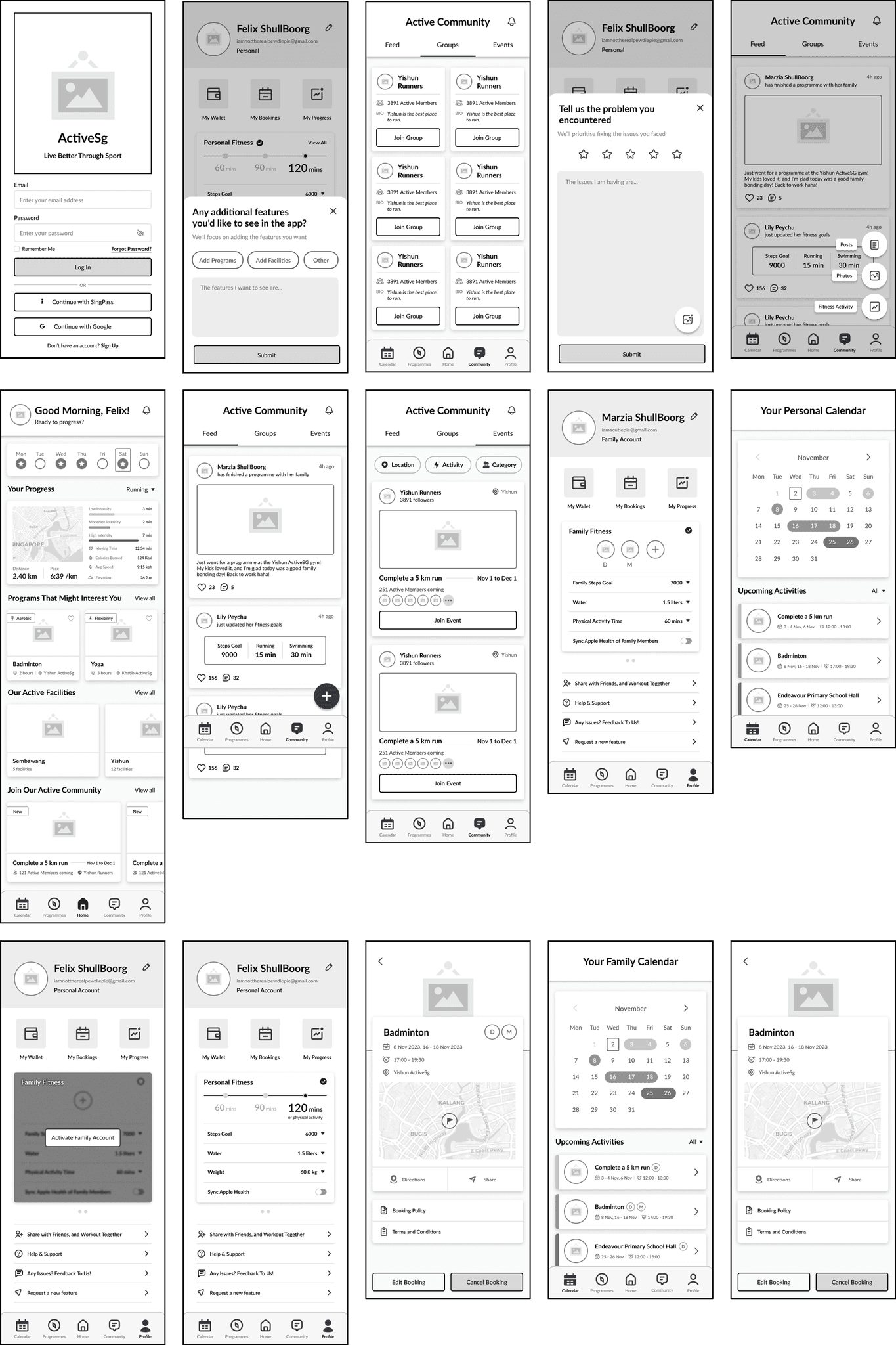
I began with low-fidelity wireframes to explore layout and navigation ideas, focusing on the revamped Community tab, Events feature, meet-up creation and sharing, as well as the new family account setup.
MID FIDELITY WIREFRAMES
In the mid-fidelity stage, I refined the structure by incorporating flows for browsing community events, creating and forwarding meet-ups to friends, and I also designed how the entire family can join and track shared activities through a central dashboard.
HIGH FIDELITY WIREFRAMES
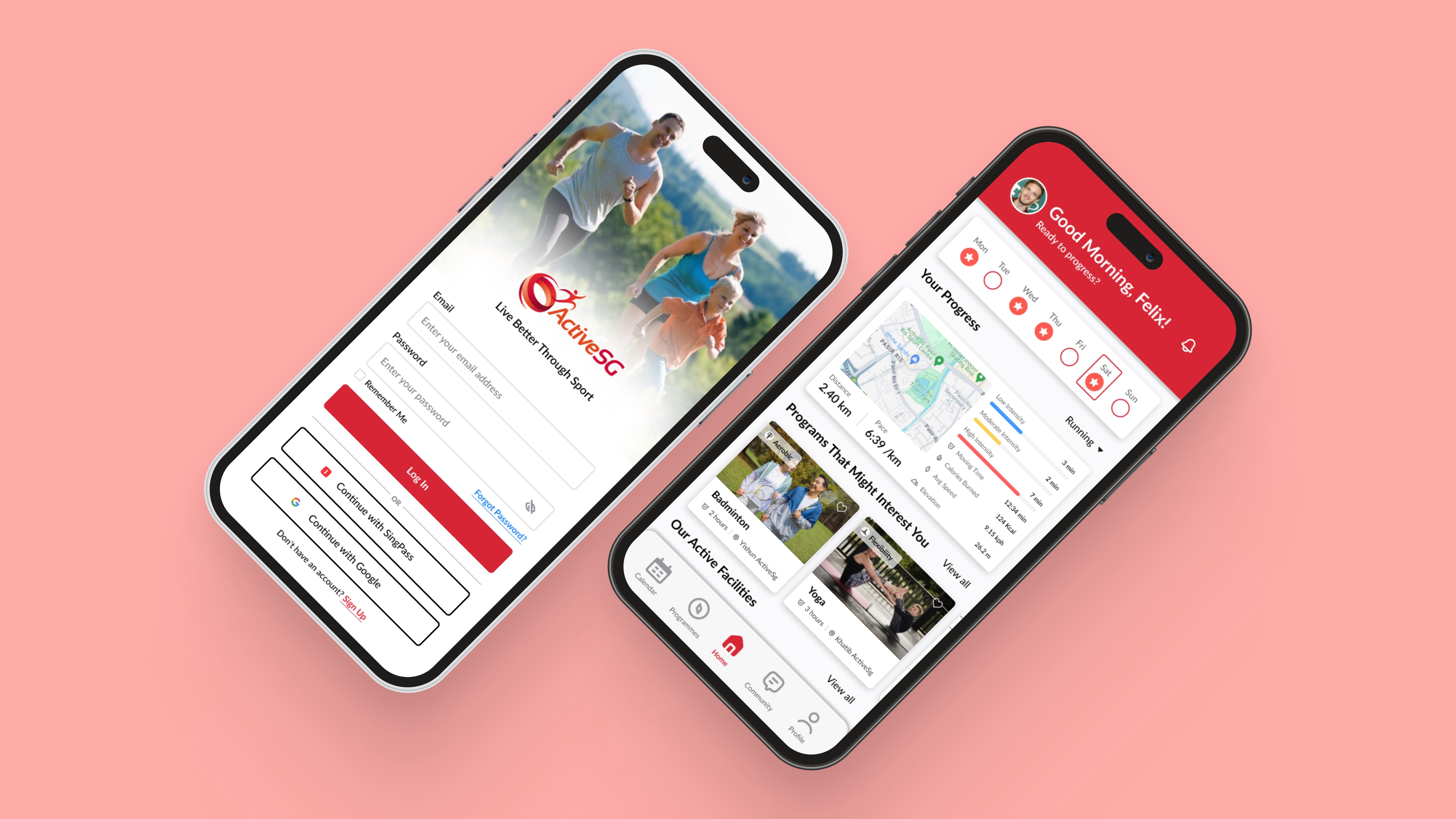
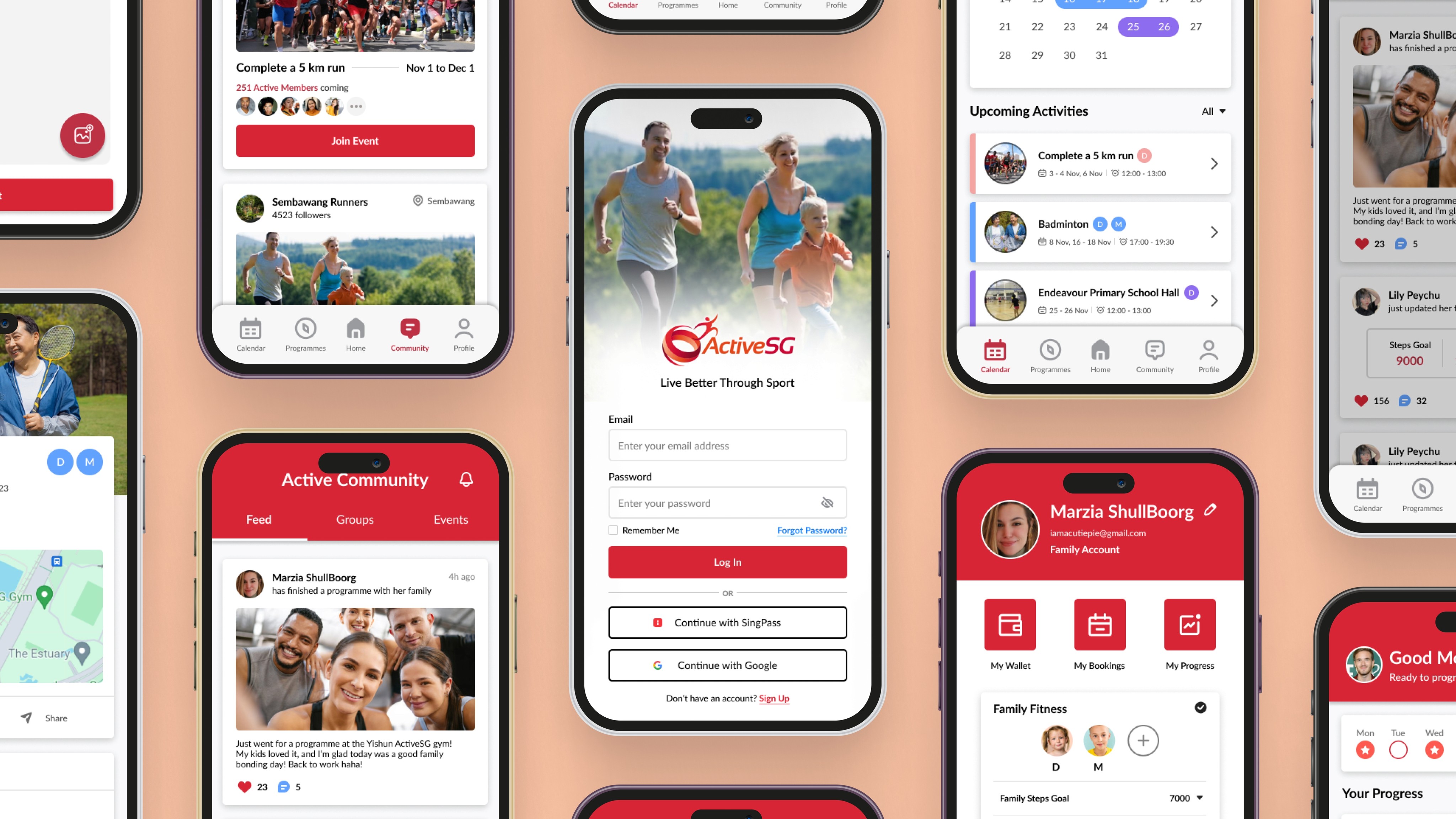
Finally, I developed high-fidelity screens and built an interactive prototype in Figma to simulate these features. I focused on designing intuitive interactions for both individual and family user journeys, aiming to make ActiveSG more inclusive and community-oriented.
Project Overview
ActiveSG is a holistic mobile application designed to promote a community-centric approach to fitness and wellness among Singapore residents.
It goes beyond the typical functionality of a sports app by aiming to foster a sense of inclusivity, encourage a lifestyle change, and enhance community engagement through sports participation.
ActiveSG seeks to position itself as a lifestyle destination, seamlessly integrating into the daily lives of its users and offering a holistic experience that transcends mere physical activity.
TIMEFRAME
4 weeks
MY ROLE
UX + UI Design, Visual design, Branding, User flow, Research, Prototyping + Testing
TOOLS
Figma, Fig Jam, Google Forms
Define
THE PROBLEM
Despite its ambitious goals, ActiveSG faces significant challenges in terms of user interface and experience. Many users find the app's interface unintuitive, with complex navigation and non-responsive touch features, making it difficult to navigate.
Additionally, there are issues with booking and transaction processes, particularly during peak times, and the app requires separate accounts for each family member to book tickets inconveniently.
Furthermore, the app's limited functionality and missing features, such as poor search functionality and inefficient slot booking systems, have led to user dissatisfaction.
THE OBJECTIVE
Enhance the user interface and experience to make the app more intuitive and user-friendly.
Simplify the booking and transaction processes, making them more efficient and user-friendly.
Implement a family-friendly booking system that allows for easier management of family members' activities.
Expand the app's functionality and features to meet users' needs and expectations.
THE GOAL
How can we redesign the user interface to make it more intuitive and responsive?
What steps can be taken to streamline the booking and transaction processes for a smoother user experience?
How can we develop a more family-friendly booking system that accommodates the needs of all family members?
What additional features and functionalities should be introduced to enhance the overall user experience and meet the diverse needs of the community?
Research
For the ActiveSG redesign, we conducted extensive user research through surveys, interviews, and usability testing with a diverse group of ActiveSG app users. The research aimed to understand their experiences, pain points, and expectations from the app.
NEEDS
An intuitive and user-friendly interface that simplifies navigation.
Efficient and straightforward booking and transaction processes.
A family-friendly system that allows for easy management of family members' activities.
WANTS
Improved search functionality to quickly find desired activities and facilities.
Enhanced features for tracking and managing fitness goals and progress.
Integration of community engagement features, such as forums or social groups, to foster a sense of belonging.
DESIRES
Personalized recommendations based on user preferences and activity.
Seamless integration with other health and fitness apps for a holistic wellness experience.
Opportunities for virtual participation in events or activities to enhance accessibility.