EatWhere
Analyze
THE MARKETPLACE
The market for food and travel apps in Singapore is highly competitive, with platforms offering diverse functionalities.
EatWhere stands out by focusing on personalized dining recommendations, cultural inclusivity, and innovative navigation tools like AR wayfinding. While competitors often provide general information, EatWhere emphasizes a unique combination of cultural education and tailored guidance for locals and tourists alike.
The increasing demand for curated dining experiences highlights a significant opportunity. With post-pandemic travel resurgence and a growing interest in local culture, EatWhere can carve its niche by addressing gaps in decision-making, cultural understanding, and seamless navigation.
USER JOURNEY AND USER FLOW
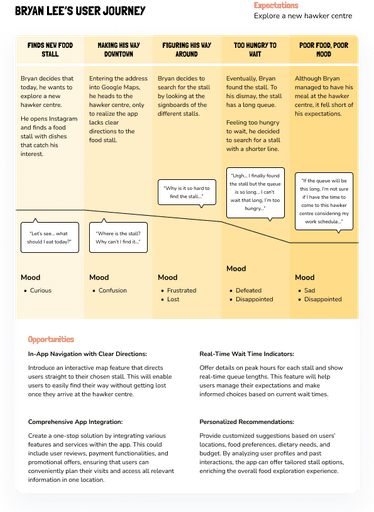
I created a user journey illustrating how users discover a new hawker centre, highlighting the emotional shift from anticipation to disappointment when faced with poor food experiences.
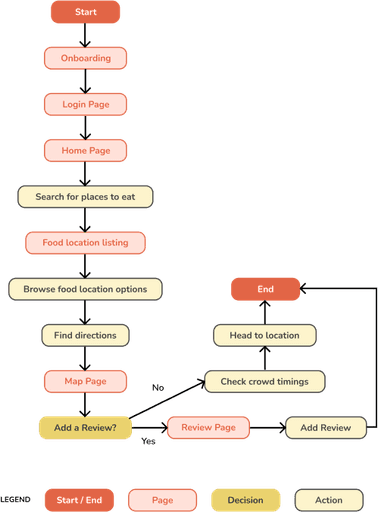
I then mapped out the user flow with a focus on the onboarding experience, ensuring a smooth journey from signing up to searching for food spots, exploring locations, browsing listings, and reading reviews.
Test
USABILITY TESTING
We conducted user testing which involved a diverse group navigating app tasks like finding hawker centers, using AR wayfinding, and ordering local dishes. Test results highlighted challenges in navigation, a lack of cultural guidance, and difficulty in deciding where to eat. Feedback was used to refine features, ensuring a user-friendly and culturally enriching experience.
FEEDBACK
Users struggled with decision fatigue due to the abundance of dining options.
Navigating maps and finding hawker centers or hidden gems was challenging and unclear.
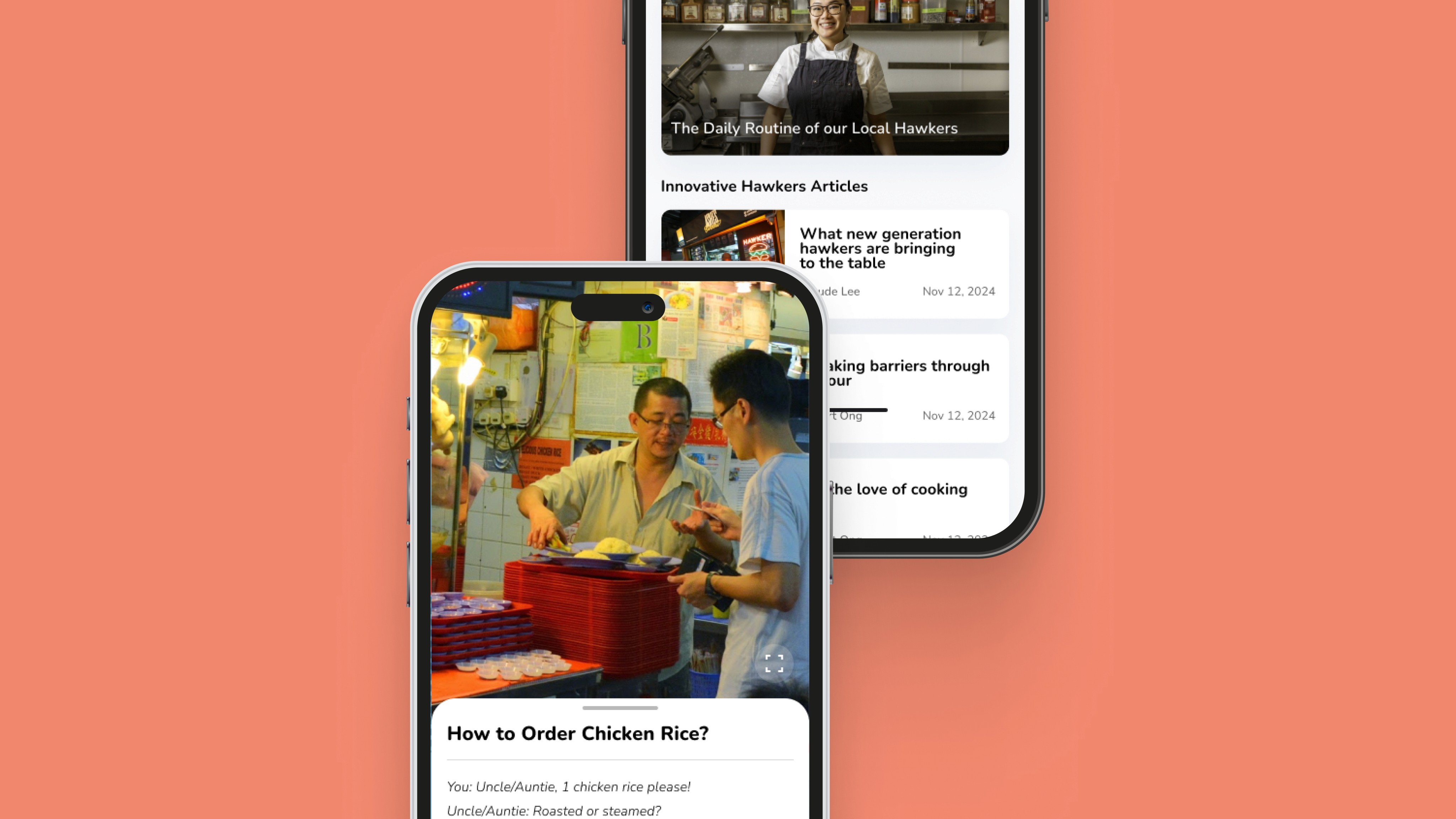
Tourists and new users felt intimidated by language and cultural barriers when ordering at hawker stalls.
Participants sought more personalized recommendations and interactive features to guide their dining choices.
SOLUTION
Introduced Spin the Wheel feature for a fun, randomized way to decide where to eat, reducing decision fatigue.
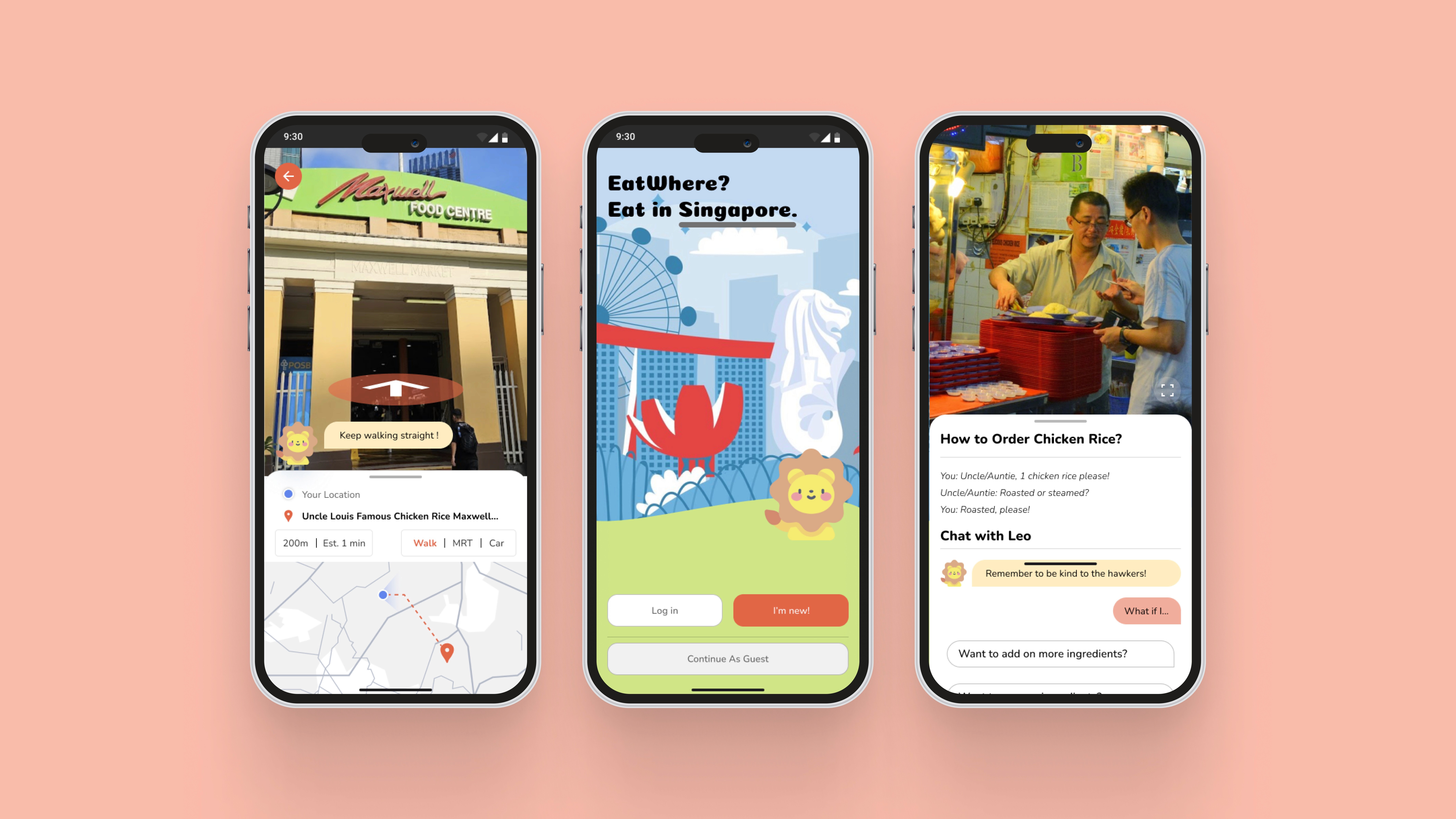
Enhanced map interface with clearer visuals, detailed information, and improved AR Wayfinding for better navigation.
Designed Chat with Leo to provide real-time guidance on ordering local dishes, combining flavors, and navigating cultural nuances.
Added For You page with tailored recommendations based on user preferences and behaviors.
Final Design
EATWHERE PROTOTYPE
Key takeaways
WHAT WENT WELL
The AR Wayfinding feature received high praise from local testers, who found it innovative and easy to use. Local user testers highlighted it as one of the most impressive aspects of the app, showcasing its intuitive functionality and innovative design.
LESSONS LEARNT
The project provided valuable hands-on experience, especially in integrating AR functionality and managing user feedback cycles. We learned the importance of prototyping with more features to identify potential usability issues early and provide a more robust user experience during testing.
This project emphasized the necessity of deeply understanding user needs and preferences, enabling us to align our features more closely with their expectations.
Design
LOW FIDELITY WIREFRAMES
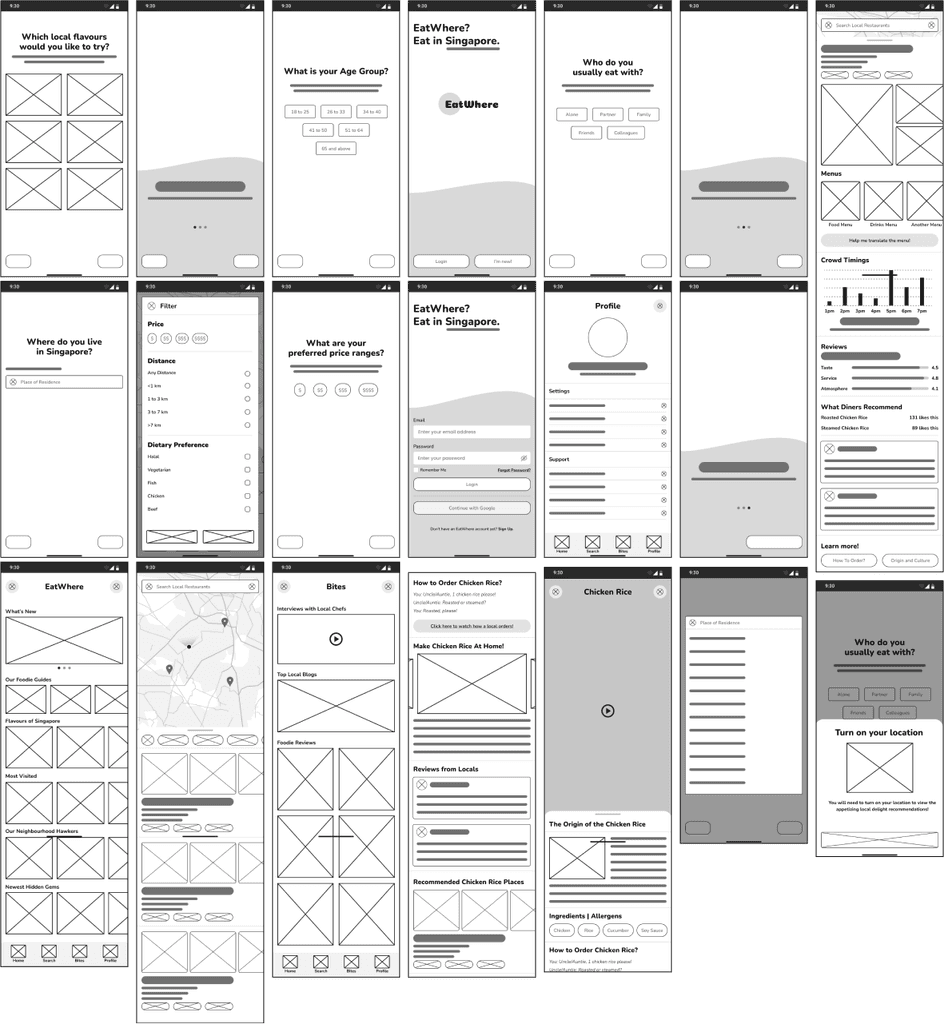
I began with low-fidelity wireframes to experiment with different layouts and navigation ideas, focusing on the onboarding experience, profile creation and personalized food choices for users.
MID FIDELITY WIREFRAMES
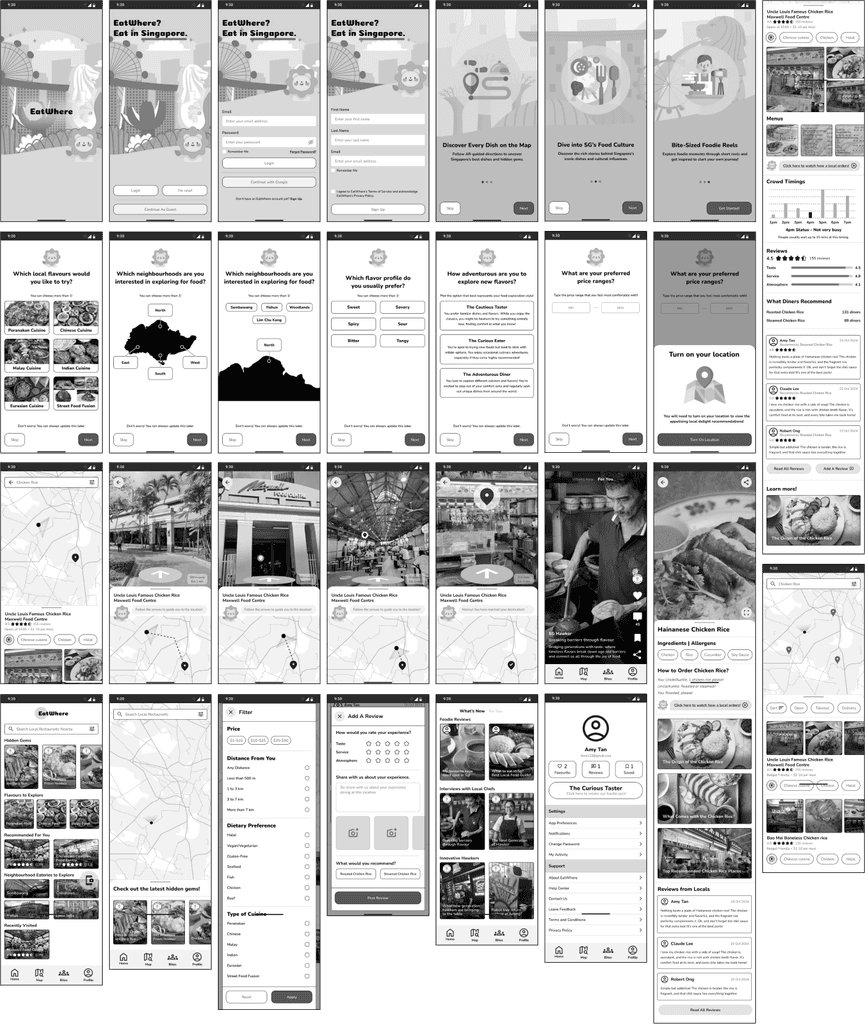
I moved on to mid-fidelity wireframes to refine the layouts and navigation, incorporating more detailed features and browsing options to lay the foundation for a more complete user experience.
HIGH FIDELITY WIREFRAMES
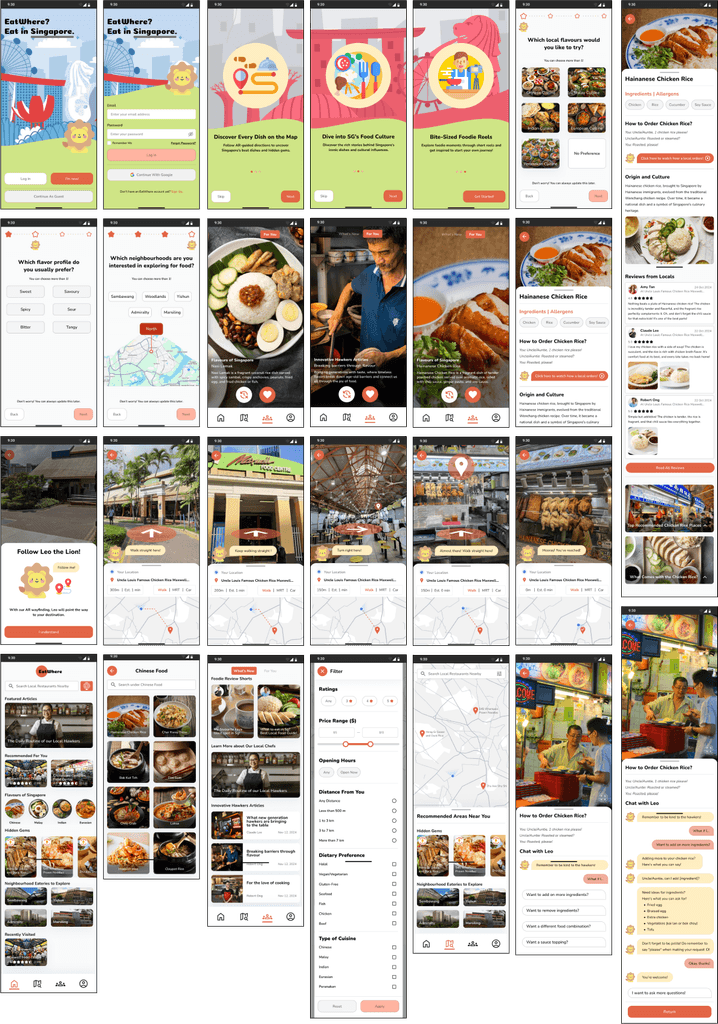
I then designed high-fidelity screens and developed an interactive prototype using Figma to simulate the user experience and gather meaningful feedback through usability testing.
Project Overview
EatWhere is an original app design created to simplify Singapore’s vibrant food scene for both locals and tourists.
With a focus on addressing decision fatigue, cultural barriers, and inefficient navigation, the app bridges gaps in user experience while showcasing the rich diversity of local cuisine.
By integrating innovative features like personalized recommendations, interactive tools, and AR wayfinding, EatWhere aims to offer a seamless and engaging platform for food exploration.
TIMEFRAME
4 weeks
MY ROLE
UX + UI Design, Visual design, Branding, User flow, Research, Prototyping + Testing
TOOLS
Figma, Fig Jam, Google Forms
Define
THE PROBLEM
Navigating Singapore’s diverse and bustling food scene can be a challenge for locals and tourists alike. Many users experience decision fatigue due to the overwhelming number of dining options, making it difficult to choose where to eat.
Tourists often face language and cultural barriers when ordering at hawker centers, struggling with meal combinations, unfamiliar terms, and local dining etiquette. Additionally, navigating to hidden gems and popular food spots is hindered by unclear maps and limited travel information, leading to frustration and missed opportunities to explore Singapore’s vibrant culinary landscape.
To address these issues, there is a need for a platform that simplifies decision-making, bridges cultural gaps, and provides clear, intuitive navigation. Users seek an engaging and user-friendly app that offers personalized recommendations, supports cultural understanding, and ensures effortless travel to dining destinations.
THE OBJECTIVE
Create an intuitive and user-friendly interface that simplifies decision-making and navigation.
Offer personalized dining recommendations based on user preferences and location.
Develop features that bridge language and cultural barriers, such as real-time ordering guidance.
Enhance navigation tools with detailed maps and AR wayfinding for locating food destinations.
Introduce interactive and engaging tools to make dining exploration fun and seamless.
THE GOAL
How can we reduce decision fatigue by tailoring recommendations to individual preferences?
What strategies can foster cultural understanding and confidence in navigating local food scenes?
How can we enhance the user experience with intuitive navigation and engaging interactive features?
Research
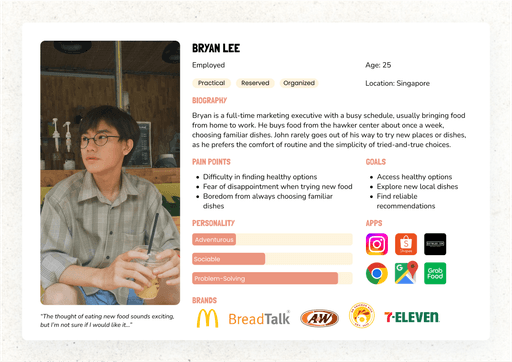
We conducted extensive user research, including surveys, interviews, and usability testing, to uncover pain points and expectations. Insights revealed a desire for simplified decision-making, clear navigation tools, and support for understanding local food culture. Participants emphasized the need for a seamless experience that combines fun, personalization, and functionality to meet their dining exploration needs.
NEEDS
Clear and user-friendly navigation tools.
Support for understanding and ordering local dishes.
Recommendations tailored to individual preferences.
WANTS
Interactive tools like "Spin the Wheel" for spontaneous dining decisions.
Enhanced AR wayfinding features to locate hidden gems.
Integration of community-driven content like hawker interviews.
DESIRES
Personalized dining experiences based on mood, behavior, and saved preferences.
Real-time guidance on cultural dining etiquette.
Easy access to local food stories and hidden gems.